What Is Algorithmic Hegemony?
Sometimes when you scroll through certain video apps, you only intend to watch a few clips but end up browsing for hours. Only when your eyes get tired do you remember to put down your phone. Of course, you might say this is a sign of poor self-control, but behind these apps lies an algorithm designed to maximize user engagement time. Is it justifiable for entertainment apps to manipulate human nature in this way?
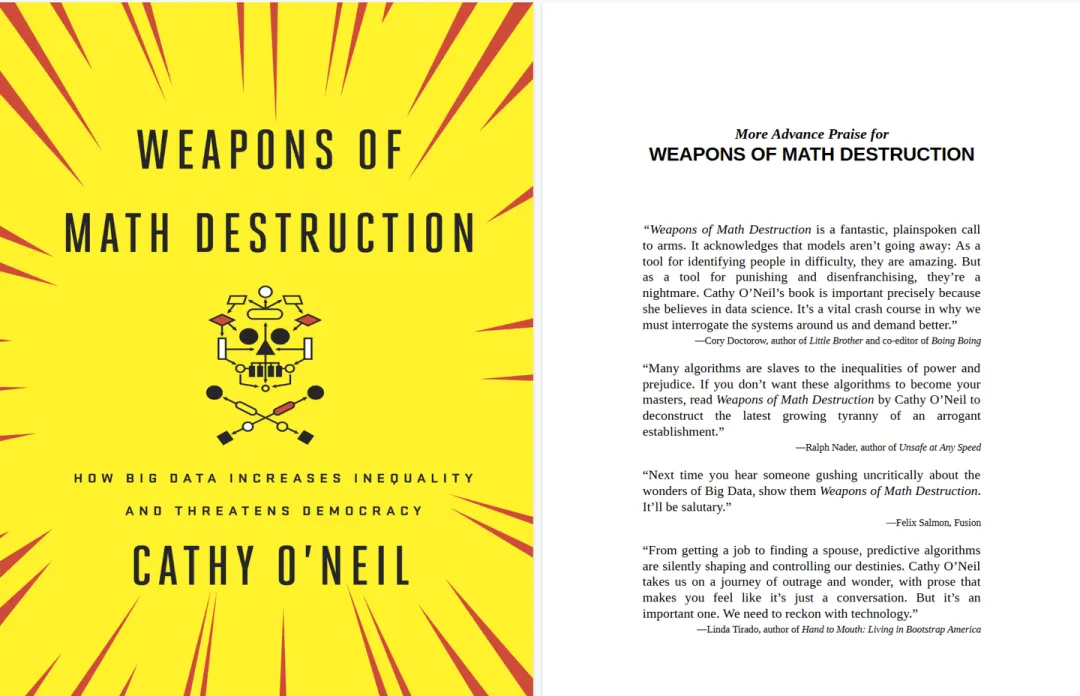
There is a popular science book titled Weapons of Math Destruction: How Big Data Increases Inequality and Threatens Democracy, commonly translated in Chinese as 《算法霸权》 (Algorithmic Hegemony). It exposes how such algorithms are misused in inappropriate contexts. The author, Cathy O’Neil, holds a Ph.D. in Pure Mathematics from Harvard, has taught at MIT, and later worked as a financial analyst and data scientist. She firmly believes that when algorithms are placed in the wrong context, they are no longer neutral tools.
Due to its insightful analysis, the book received the “Euler Book Prize” from the mathematics community. It vividly explains the potential risks of algorithmic models. The author calls for injecting ethics into algorithm design. Entertainment apps that use algorithms to “maximize user dwell time” truly embody what a certain industry leader described as leveraging the downward pull of human nature to maximize software value.
Algorithmic models are typically regarded as core assets and are not disclosed to the public. To ordinary users, this creates a massive black box. Shopping apps, for instance, infer users’ socioeconomic status based on their behavior and tend to recommend cheap, low-quality products accordingly. While users may enjoy the experience, have we ever stopped to consider that they are being discriminated against by the software?
Therefore, the author advocates that algorithmic models should also bear social responsibility and not focus solely on profit maximization. Incorporating ethical guidelines, establishing relevant laws and regulations, and creating supervisory bodies are necessary steps to ensure responsible algorithm use.