The Best Introductory Books on Statistics
The introductory statistics book Introductory Statistics, authored by Neil A. Weiss, a statistics professor at Arizona State University, is highly suitable as an undergraduate introduction to statistics. It is particularly well-suited for students who have never before studied statistics. Due to its popularity, it is now in its 10th edition.
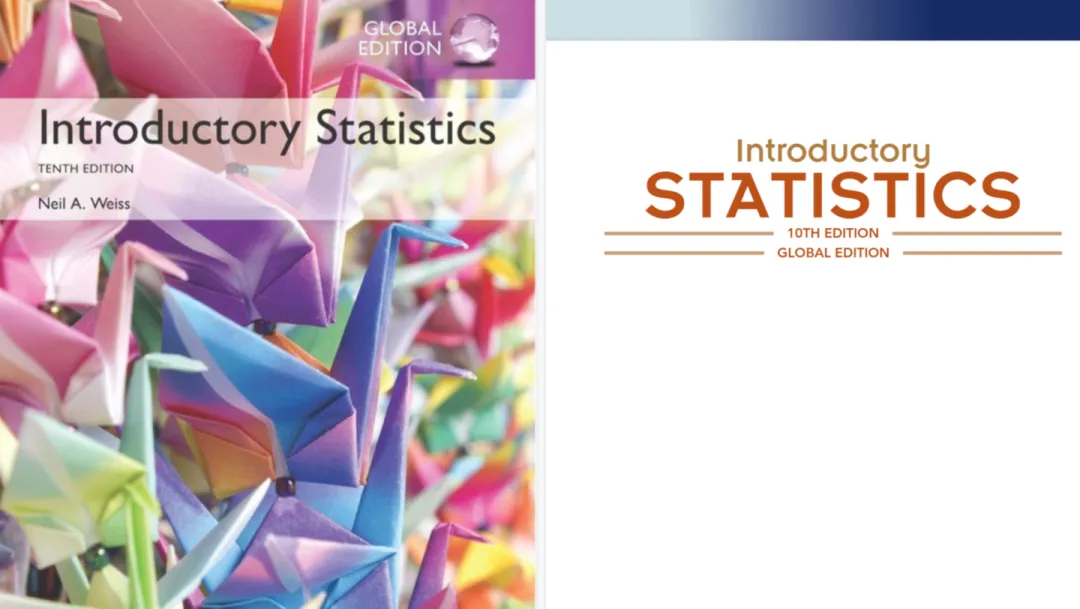
Compared to Barbara Illowsky’s Introductory Statistics, Weiss’s book covers a broader range of topics. It not only includes fundamental statistical concepts but also delves into advanced subjects such as multiple regression and experimental design. Additionally, it offers over 1,000 datasets and more than 3,000 exercises, which greatly help readers build a solid foundation in statistical analysis.
The book uniquely presents both the critical value method and the p-value method for hypothesis testing side by side. This design allows students to either focus on one method or explore both in depth, enhancing their understanding. The book significantly deepens readers’ comprehension of statistics and its underlying principles. The author has carefully structured the content and employed a clear, engaging writing style. He skillfully avoids overly complex topics that might confuse beginners. The emphasis is on explaining fundamental statistical concepts in straightforward, accessible language, which appeals to many newcomers. Some of the chapters covered include the nature of statistics, data organization, descriptive statistics, discrete random variables, inference methods in regression and correlation, as well as analysis of variance (ANOVA).
This book is an ideal textbook for introductory courses that emphasize statistical reasoning and critical thinking. It is comprehensive, and the author’s meticulous and clear explanations make the learning process smoother. However, the book does demand a slightly higher level of background knowledge compared to Barbara Illowsky’s Introductory Statistics; prior familiarity with linear algebra, probability, and related quantitative theories is recommended. Without this foundation, learners may find the material relatively challenging. Therefore, it is less suitable for self-study but is widely used in university classrooms to help students systematically master the basics of statistics.