Introduction to Topology: Second Edition
As you study mathematics for a longer period, you’ll find that the higher the level of abstraction in a theory, the wider its applicability. However, high abstraction doesn’t necessarily mean high difficulty. Topology has a relatively simple structure, and reasoning is much easier. Courses like differential geometry and abstract algebra are basically all about formulas, coordinates, and various elaborate calculations, while topological spaces have only three axioms. The reasoning process is very clear, and the proof methods are highly transferable. After learning topology, you’ll find:
1. The essence of computation is to simulate a relatively simple and stable structure.
For example, in numerical computation, whether it’s integration or differentiation, the essence is to construct a stable structure. The calculation result is equivalent to determining that there is a stable topological structure at the underlying level.
2. Theorems have boundaries and scope of application.
For example, in a closed space, a continuous function must have a maximum value. A boundary is a necessary and sufficient condition for the stability of a mathematical structure.
3. Squares, triangles, and circles are actually the same thing in topology (homeomorphism).
Topology doesn’t care whether a shape’s edges are straight or curved, whether it has angles or not, or whether it’s symmetrical. Topology only cares about whether the shape is connected, has boundaries, and has branches, etc., based on simple rules. With a simple stretch, a square can become a circle, a triangle can become a circle, and a circle can become a triangle. Extending this further, any closed curve in a plane is homeomorphic to a circle.
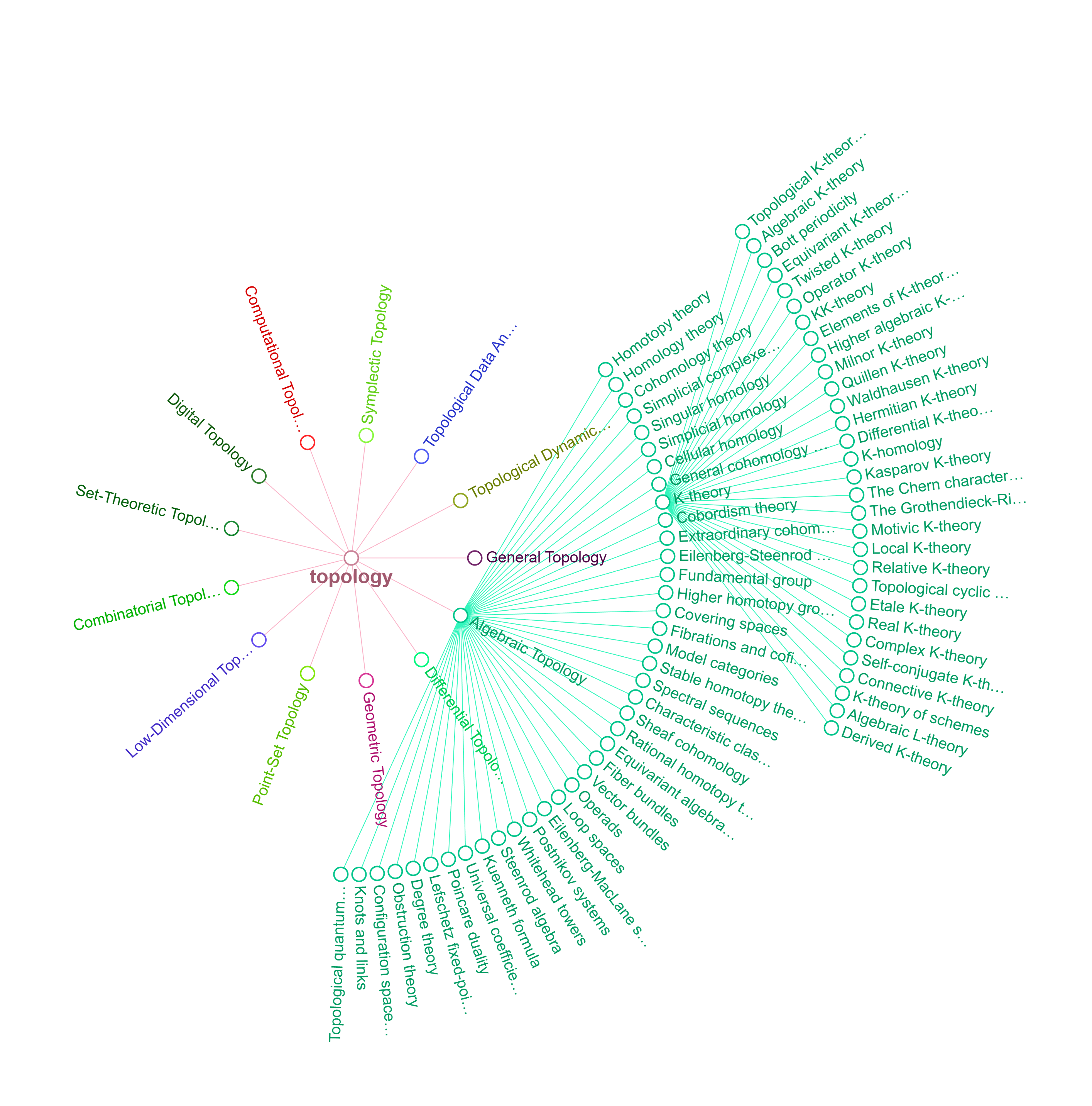
Topology is an independent discipline that developed in the 20th century. Topology is similar to graph theory; topology focuses on the structure and relationships of continuous spaces (an infinite number of points), while graph theory focuses on the structural relationships of discrete objects (a finite number of points).
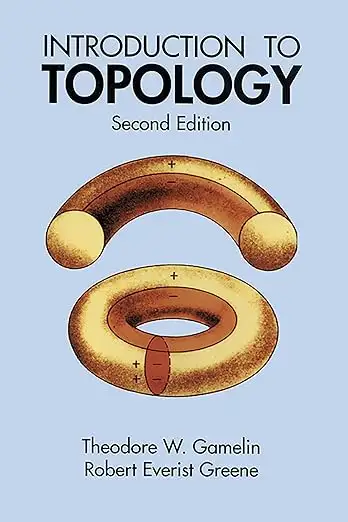
I recommend an introductory book to topology: Introduction to Topology: Second Edition. The author details how topological spaces are born, how to construct a topological space, the properties of topology, and guides readers to understand some non-trivial applications of topology in analysis. It clearly elucidates the relationship between topology and analysis. This book will reveal the true magic of topology.