The Best Books for Learning Computer Algorithms
In the field of computer algorithms, there is no doubt that the best book is Introduction to Algorithms, often referred to as the bible of algorithms and known in Chinese as 《算法导论》.
The book has four authors: Cormen, a computer science professor at Dartmouth College; Leiserson and L. Rivest, computer science professors at MIT; and Stein, a computer science professor at Columbia University.
The first edition was published in 1990, marking the first systematic establishment of a standard framework for algorithms. Many computer science papers involving algorithms cite this book as an authoritative reference. It serves both as a textbook and a reference manual.
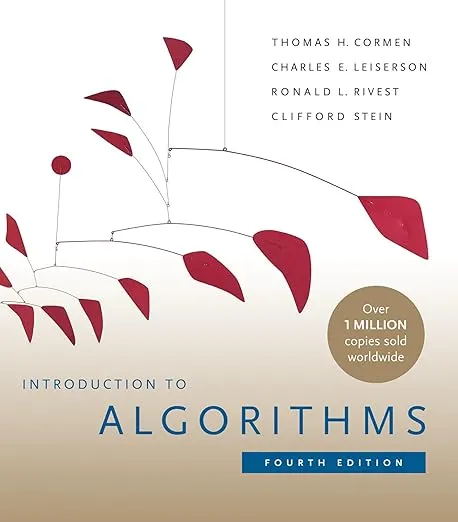
Due to its classic status, this book is used as a core computer algorithms textbook at many leading universities worldwide, including Stanford, Harvard, MIT, and UC Berkeley. It has also been recognized as a “must-read book for programmers.” Within academic and programming communities, the book is commonly referred to as “CLRS,” derived from the initials of its four authors’ last names. Initially, it was known as “CLR” until Stein joined for the fourth edition.
The book does not focus on programming techniques; instead, it uses mathematical methods to analyze algorithm efficiency and the systematic design of algorithms, covering concepts such as complexity analysis, divide-and-conquer strategies, and abstract models. It comprehensively includes most computer-related algorithms, offering detailed classifications like dynamic programming, greedy algorithms, graph algorithms, and NP-completeness.
It can also be used as an encyclopedia of algorithms. When unfamiliar with a particular algorithm, readers can consult this book for thorough explanations.
Moreover, the content leans toward the mathematical side, requiring readers to have a certain level of mathematical background. While some simple algorithms can be understood by high school students, others involve knowledge of discrete mathematics and probability theory. Readers are also expected to be familiar with at least one programming language, as the book does not provide implementations in any specific language. Instead, it offers pseudocode, requiring readers to implement and test the algorithms in a programming language they know.