What Exactly Is Calculus?
All scientific knowledge should help you see the world clearly, not just be about plugging into formulas and calculating answers.
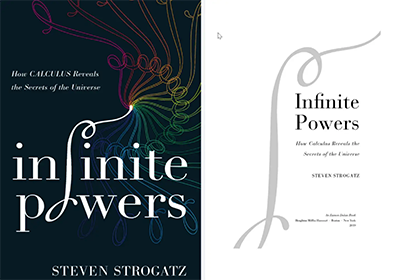
I recommend Steven Strogatz’s popular calculus book Infinite Powers: How Calculus Reveals the Secrets of the Universe. The author considers differentiation and integration as two sides of the same coin: differentiation is used to analyze local changes, while integration assembles these local parts. Viewing calculus as a whole, it can both break down everything and put everything together, to the point that calculus can be regarded as the language of the universe.
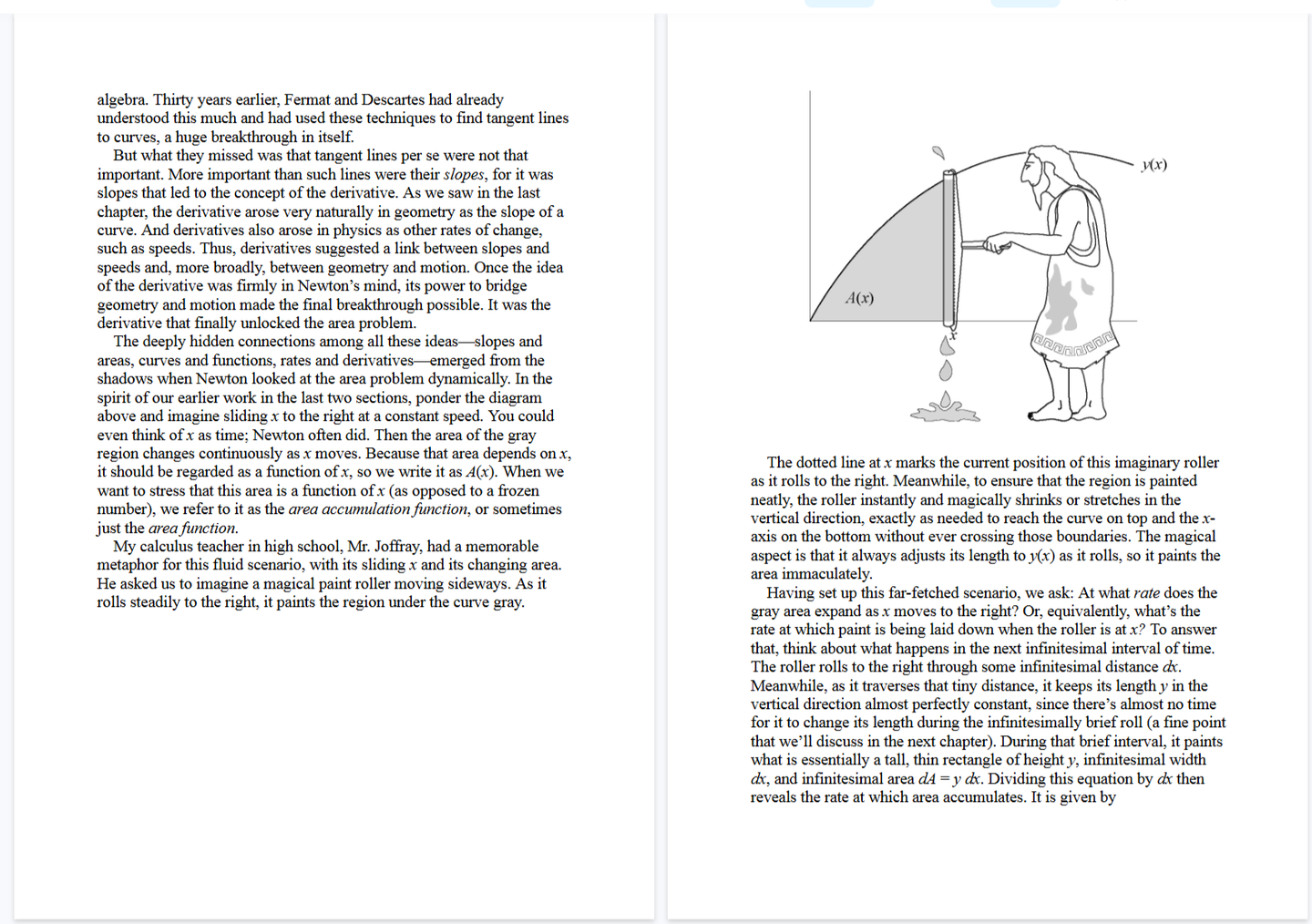
The origins of calculus trace back to ancient Greece, where Archimedes used the method of exhaustion to calculate areas. Over time, calculus was further developed, and both Newton and Leibniz independently created their own systems of calculus—though essentially they are the same. Newton’s calculus was motivated by physical motion and practical applications, while Leibniz’s calculus was a purely mathematical deduction filled with abstract symbols. Interestingly, Leibniz published his calculus paper earlier (in 1684), so the mathematical community widely adopted Leibniz’s notation system, which gradually became the international standard. Today, calculus textbooks worldwide use Leibniz’s notation, while Newton’s calculus is mainly studied by physics students.
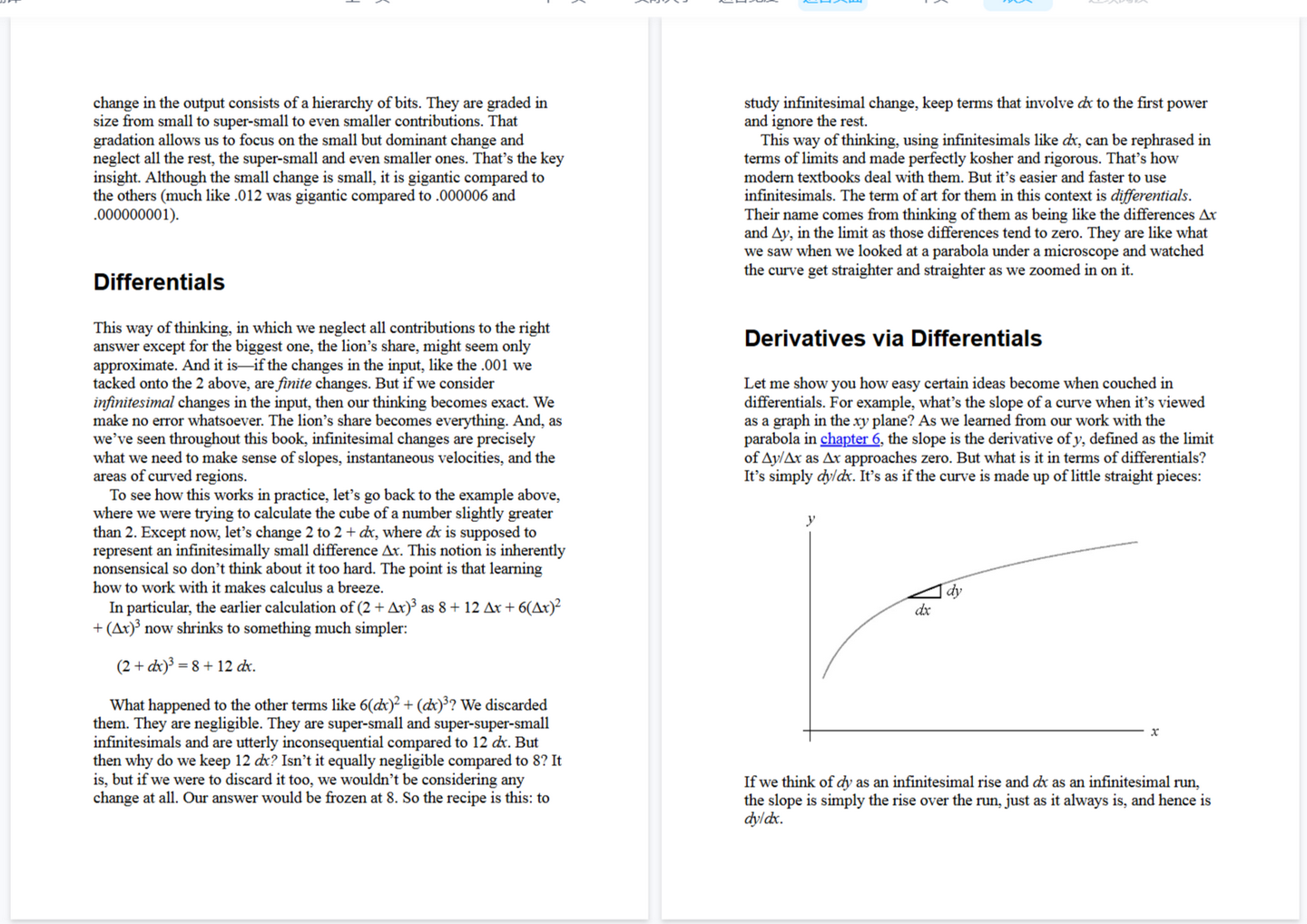
This book uses concrete real-world applications from various fields—such as science, engineering, and medicine—to detail the vital role calculus plays in these domains. It helps readers understand that calculus is not merely a set of mathematical symbols but a language to comprehend the world.