How to Solve It: A New Aspect of Mathematical Method
In mathematics, the method of thinking is more important than the answer. Many people understand mathematical thinking as simply being able to apply formulas, solve problems quickly, have perfect logic, and avoid mistakes. This is not the case. True mathematical thinking is the ability to find a definite structure in an uncertain world.
Many students give up on mathematics after encountering one or two difficult problems. In reality, mathematical problem-solving ability is not an innate talent, but a fundamental ability that can be cultivated. I once read a book on mathematical thinking training, How to Solve It: A New Aspect of Mathematical Method, in which the author frankly stated that any mathematical problem can be broken down into the following four steps:
-
Understand the problem itself. In middle school physics, to cultivate students’ thinking habits, the problem-solving process often requires students to write down “known conditions,” “unknowns to be solved,” and “solution process.” This essentially forces students to develop the habit of understanding the problem first.
-
Develop a problem-solving plan. There is no universal solution to mathematical problems, but there are common problem-solving strategies, such as: analogy, simplification, reverse thinking, adding auxiliary elements, modifying conditions, and drawing diagrams.
III. Executing the Problem-Solving Plan
Once a problem-solving strategy is chosen, begin solving the problem immediately. Don’t be afraid of failure; the problem-solving process is a continuous process of trying.
IV. Reflection
After completing the problem, cultivate the habit of summarizing and reflecting. Is there a simpler solution? Which step in the problem-solving process is the most crucial? General math teaching often only emphasizes correct calculation results; memorizing formulas and theorems will not take you far on the path of mathematics. Mathematics is not just a collection of formulas and theorems; it is a way of thinking.
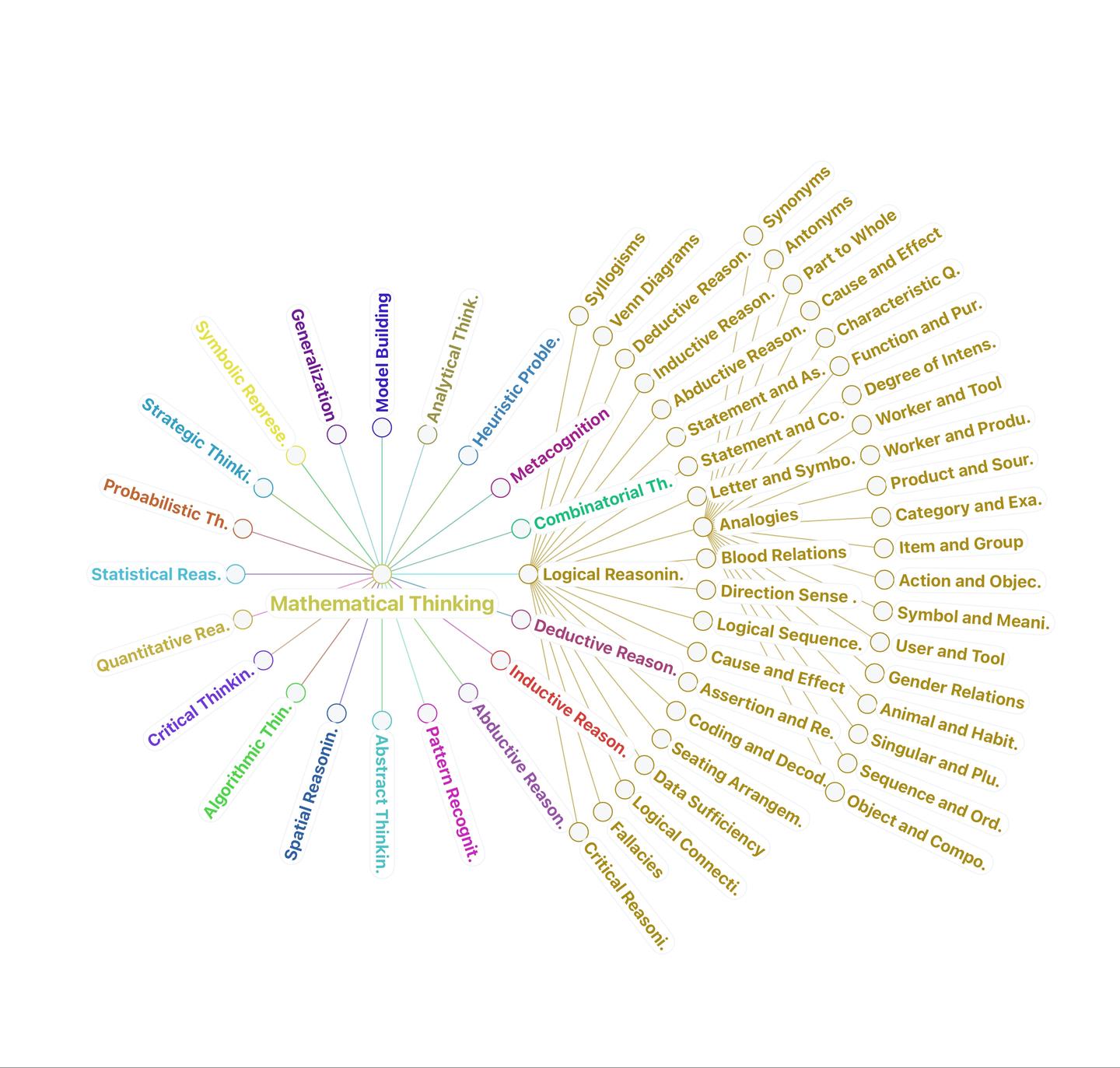
The above methods seem simple, but in reality, most students with poor math scores get stuck at the first step—not understanding the problem. This book doesn’t teach you specific problem-solving methods; it focuses on the thought process behind mathematical problem-solving and is one of the best books in the field of mathematical methodology. The author, George Polya, is a professor at Stanford University. This book is a culmination of his many years of teaching experience and was first published in 1945, where it was very popular with students.