The Best Introductory Books for Learning Artificial Intelligence
Anyone with practical AI experience knows that frameworks like Scikit-Learn, Keras, and TensorFlow are rarely used in real-world projects today. In cutting-edge fields such as research and academia, engineers predominantly use PyTorch. PyTorch allows for faster model development and is generally more user-friendly.
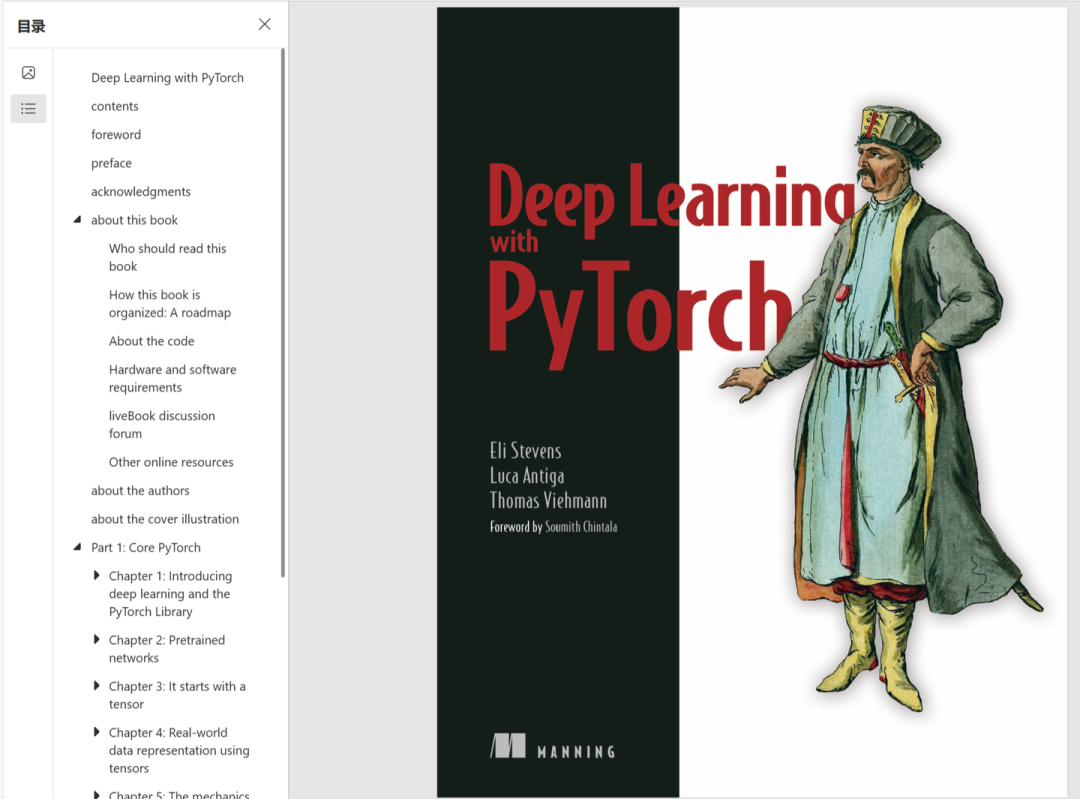
There is a dedicated book on PyTorch for artificial intelligence titled Deep Learning with PyTorch: Build, train, and tune neural networks using Python tools. This book explains how to train neural network models with PyTorch. For readers with a solid foundation in Python, it serves as an excellent AI beginner’s guide.
The book is co-authored by Eli Stevens, Luca Antiga, and Thomas Viehmann, all of whom have extensive experience in PyTorch project development and are key contributors to the PyTorch community. In the book, Thomas Viehmann primarily covers the internal principles of PyTorch, while Eli Stevens and Luca Antiga focus on best engineering practices.
PyTorch is an open-source deep learning framework developed by Meta (formerly Facebook), released in 2017 and now the AI framework of choice across the global academic community.
Unlike other frameworks that rely on static computation graphs, PyTorch uses dynamic computation graphs constructed in real time, offering greater flexibility. The model structure can change dynamically with each iteration, making it especially suitable for tasks with variable-length inputs. This book emphasizes foundational PyTorch concepts such as tensors: their creation, indexing, and transformations, as well as automatic gradient computation and dynamic graph tracking. It includes numerous practical examples, such as building a tumor image classifier using PyTorch, all of which can be directly applied to real-world projects.
The code and datasets from this book are available on GitHub for direct access: github.com/deep-learning-with-pytorch/dlwpt-code