A Mindset-Changing Book: *Algorithms to Live By: The Computer Science of Human Decisions*
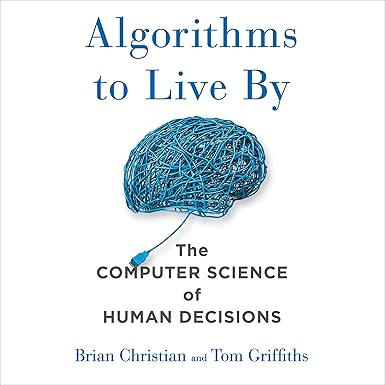
I recommend the book Algorithms to Live By: The Computer Science of Human Decisions. This book applies commonly used algorithms from computer science to real-life situations. Many of the challenges ordinary people face can be approached algorithmically. Especially when information is incomplete (or asymmetric), instead of making decisions on a whim, you can adopt an algorithmic mindset to solve problems in everyday life. These methods are particularly practical for recent graduates who lack social experience—a simple set of strategies to avoid making wrong choices is invaluable.
1. How to Choose When Faced with Many Options
Everyone encounters major life decisions like renting a place, buying a house, or finding a life partner. How can you make a relatively good choice without outside help? The authors recommend using the 37% rule. For example, if there are n candidates for a job and you are the interviewer, you first evaluate 37% of the candidates in detail without making any decisions. Then, among the remaining 63%, if someone surpasses all previous candidates, you immediately make an offer. The odds are very high that this person is the best candidate. Conversely, if you are the interviewee, you can also use this approach to screen job opportunities or other significant life decisions.
Another popular math book, The Joy Of X: A Guided Tour of Math, from One to Infinity, also references this method.
2. How to Judge Whether Someone Is Trustworthy
When you just meet someone and your initial impression is fairly positive, but later they both lie to you once and fulfill a promise once, how should you assess their reliability? It is neither correct to never trust someone again after one lie nor to fully trust someone after one fulfilled promise. The book introduces a Bayesian approach to assess trustworthiness: start with a neutral stance toward anyone new, avoiding snap judgments like “They seem trustworthy” or “They look honest.”
The specific approach is to update your trust level based on their actions: increase trust when they fulfill promises; if they fail to deliver repeatedly despite apologies and keep deferring commitments, you can reasonably conclude they are unreliable.
In reality, you can’t keep testing everyone extensively. Often, small everyday actions reveal reliability. For example, if you ask someone to do something and they say, “I’ll try to finish it tomorrow,” that’s likely unreliable. But if they say, “I’ll finish it before 6 PM tomorrow,” you can generally trust them. Reliable people do occasionally slip up, but they typically show behavioral changes, such as stopping exaggerations or putting in more effort.
The book offers many other practical life examples: how to choose a restaurant, organize a massive amount of files, decide what to remember and what to forget, and how to break deadlocks. If you ever face a tough choice, this book might provide valuable insights.
The book has two authors: Brian Christian, a writer, and Tom Griffiths, a psychology professor. Since its release, it has been a bestseller and translated into multiple languages.